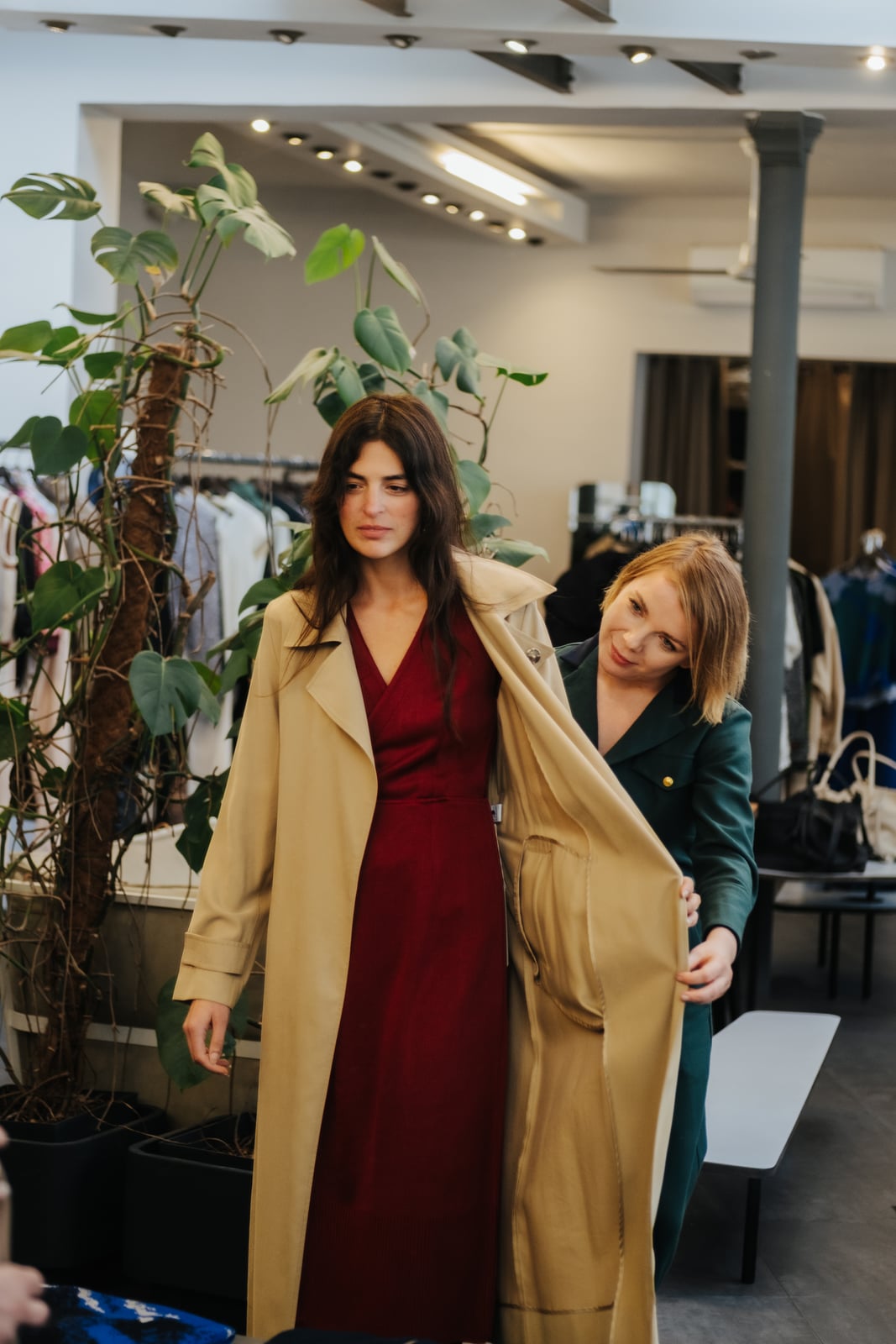
Kristi arrived at my Paris studio wearing a beautifully made black coat, black trousers, and a charcoal sweater. She'd flown in from Toronto for a long weekend with one goal: "I want to look like myself again. I just don't know what that looks like anymore."
She's not unusual. Most women I work with have spent a decade dressing safely — black, navy, grey — because choosing color feels risky. What they don't realize is that the right color does more than flatter the skin. It rebuilds confidence in a way the wrong color never can.
Where Kristi Started
Forty-three years old. Lawyer, mother, sharp dresser by professional standards. Her closet was a study in restraint: 80% black, 15% grey, 5% navy. Two cream blouses she "never knew when to wear." A red dress with the tags still on, bought three years ago for a wedding she ended up wearing black to.
"Every time I try color, I feel like I'm in costume," she told me. "And then I see other women in real color and they look so alive. What am I doing wrong?"
The Color Analysis Session
We started where I always start: in natural daylight, no makeup, against a white drape. Color analysis is not magic. It's careful observation of three things — your skin's undertone (warm or cool), the depth of your features (light or deep), and how much contrast lives naturally between your hair, skin, and eyes.
Kristi tested with strong cool tones first: ice blue, pure white, magenta, true black. Her skin went grey under the lights. Her eyes flattened. The "expensive lawyer" effect she'd built for fifteen years was actually the look of someone slightly unwell.
Then we swapped to warmer drapes: cream, camel, terracotta, deep burgundy. Her face lit up. She didn't see it at first — clients rarely do. But when I held up the mirror with the cream silk under her chin, she went quiet.
What we learned about her palette
- Skin undertone: warm, with a golden-peach base
- Depth: medium — neither very fair nor very deep
- Contrast: low to medium — her hair and eyes are similar in depth
- Season classification: Soft Autumn
Soft Autumn means her best colors are muted, warm, and medium-depth: cream, camel, sage, terracotta, dusty rose, burgundy, soft olive, warm taupe. The hard cool tones she'd lived in for years were the worst possible match for her face.
“I felt like I'd been wearing someone else's clothes for a decade and didn't know it.”
— Kristi
How Her Wardrobe Transformed
We didn't gut her closet. We rebuilt the foundation. Over two days of shopping in Paris together, we sourced:
- A cream wool coat (replacing the black one she'd worn to every important meeting)
- A burgundy silk blouse that worked for both court and evening
- Two cashmere sweaters in camel and sage
- A pair of warm-brown leather boots (replacing the black-on-black-on-black uniform)
- One terracotta wrap dress — the kind of piece she'd have written off as "too much" a week earlier
The black trousers stayed. Black is a fine accent color for Soft Autumns — it just shouldn't be the main event. The same trousers she'd worn with charcoal tops now lived under cream silk, and they looked entirely different.
One Year Later
Kristi sent me a message last month. She'd been in court that morning. The opposing counsel — a woman she'd known professionally for years — pulled her aside in the hallway and said: "I don't know what you're doing differently, but you look ten years younger and twice as confident. Are you sleeping more?"
Kristi told her she'd had her colors analyzed. "She asked for your contact. So did the court reporter."
What This Means If You're Reading This
If you've spent years in safe neutrals and feel like nothing in your closet quite works, you're probably not bad at dressing. You're probably wearing the wrong colors for your face — and once you know the right ones, everything gets easier. Shopping gets easier. Getting dressed gets easier. Looking expensive gets easier, because you've stopped fighting your own undertones.
Color analysis isn't a luxury. For most of my clients, it pays for itself the first time they avoid buying a top that "looked great in the store" but never makes it past the closet.